Introduction
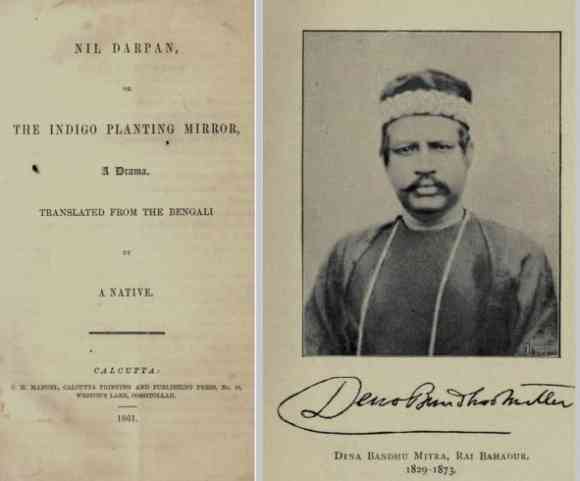
Nil Darpan (1860) is a seminal Bengali social drama that exposed the coercion, debt-bondage, and violence inflicted by European indigo planters on Bengal’s ryots, becoming the most famous literary mirror to the Indigo Revolt (1859–60) and provoking a landmark libel trial over its English translation and circulation.
Historical context
Written in the wake of the indigo cultivators’ non-cooperation and uprisings across Nadia and adjoining districts, the play distilled testimonies of forced contracts, rigged prices, beatings, sexual violence, and judicial impunity that the 1860–61 Indigo Commission would also acknowledge. By dramatizing these realities in colloquial Bangla, Mitra bridged the new bhadralok public and village ryots, giving the revolt a widely legible moral narrative.
Plot and characters
Families undone: The fortunes of cultivators like Golok Chand and Sadhu Charan’s household unravel under planter extortion, assaults by factory henchmen, and debt traps, culminating in deaths and ruin that allegorize a countryside under siege.
Memsahibs and managers: Overseers, gomasthas, and complicit local functionaries embody a system where law is bent to planter interests, amplifying the tragedy of powerless ryots seeking justice.
Language and form
Mitra’s use of regional idioms and direct speech made the scenes of intimidation and lament immediate, while the didactic moral frame aligned the audience with peasant suffering; it was among the earliest modern Bengali dramas to fuse social reportage with theatrical affect.
Translation, trial, and censorship
The English Nil Durpan: On official request via W. S. Seton-Karr and Lt. Governor J. P. Grant, Reverend James Long arranged an English translation in 1861, almost certainly executed by Michael Madhusudan Dutt, though some scholars and later editions dispute sole authorship and fidelity and credit it simply to “a Native.”
The libel case: Long’s edition, sent out in government envelopes and prefaced as “plain but true,” enraged planters and the pro-planter press (e.g., The Englishman), leading to a Calcutta libel conviction—one month’s imprisonment and a Rs 1,000 fine that was paid on the spot by Kaliprasanna Singha.
Theatrical impact: Nil Darpan was staged in Calcutta’s National Theatre and helped trigger colonial anxieties culminating in the 1876 Dramatic Performances Act, curbing politically charged Indian theatre.
Link to the Indigo Revolt
The play’s publication and performance amplified the Indigo Revolt’s grievances to urban publics in India and readers in Britain, synchronizing with the Indigo Commission’s scrutiny and adding cultural momentum to the decline of the planter system in Bengal. By mapping exploitation—from forced sowing and low procurement rates to violence and legal bias—Nil Darpan became a moral document of agrarian resistance.
The Long debate: translator and motive
Long presented himself in court as a missionary mediating “native feeling,” asserting that vernacular writing had been ignored by policymakers; the English text’s political effect arguably surpassed the Bengali original by confronting imperial audiences with peasant testimonies. The translator question remains contested in scholarship and archives despite strong contemporary attributions to Madhusudan under Long’s editorial supervision.
Themes and significance
Exploitation and agency: The drama shows how contracts, advances, and intimidation manufactured ryot indebtedness, while peasant refusal to sow indigo signaled a collective agency that shook the system.
Bhadralok–ryot bridge: By taking rural voices into city print and stage, Nil Darpan helped forge solidarities between educated middle classes and peasants that would recur across later nationalist mobilizations.
Literature as evidence: Its scenes functioned as cultural testimony that influenced administrators, journalists, and publics—an early instance of Indian literature impacting colonial policy conversations.
Legacy
Canon and curriculum: Frequently taught as a landmark in Indian social drama and protest literature, Nil Darpan exemplifies how theatre can document and catalyze social movements.
Archival access: Readers can consult the 1861 English Nil Durpan via digital archives; Bengali texts and critical essays trace how the play’s reception shaped press freedom debates and stage censorship.
Memory of revolt: Alongside Commission reports and later histories, the play sustains public memory of the Neel Bidroha’s causes and courage.

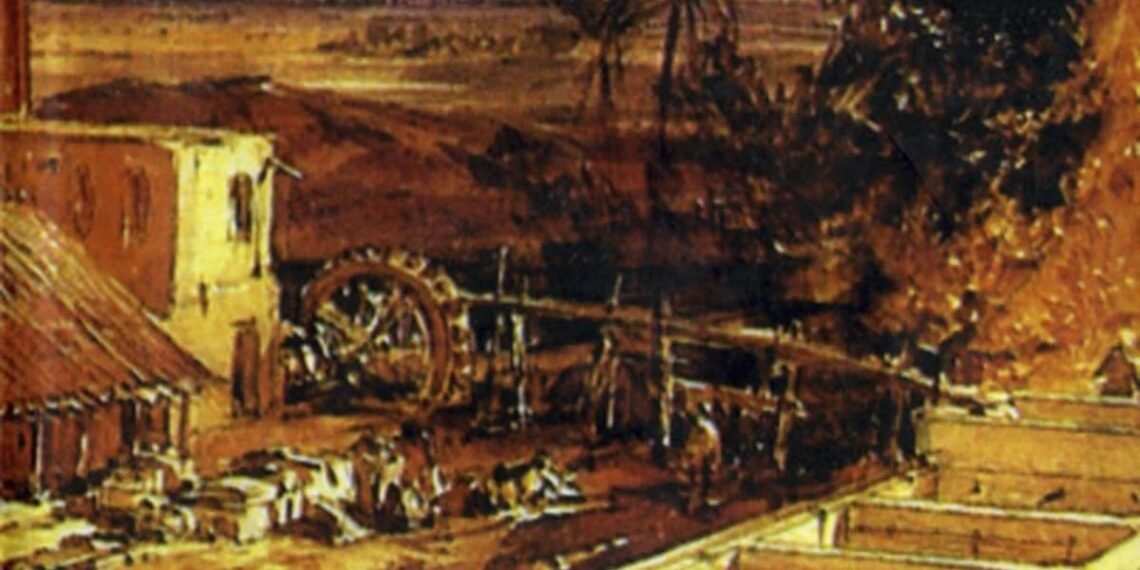
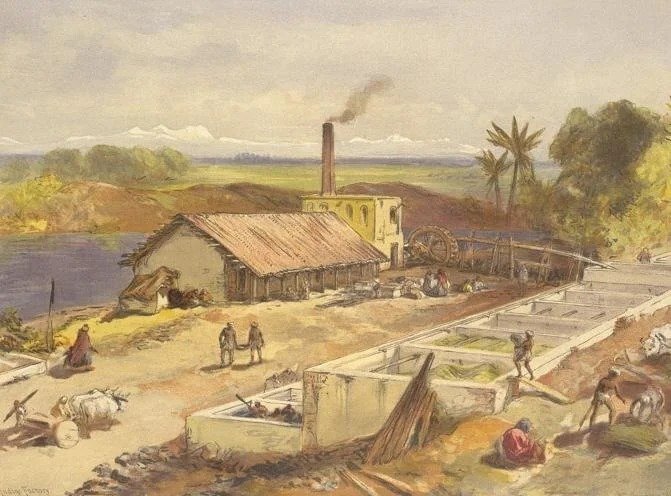
Indigo Factory in Bengal
Conclusion
Nil Darpan is both mirror and megaphone: a drama that reflected the indigo peasant’s ordeal and amplified it to the colonial metropolis. Its courtroom afterlife—James Long’s conviction, Kaliprasanna Singha’s act of solidarity, and subsequent theatre controls—confirms the potency of vernacular truth translated into the colonizer’s tongue. As literary protest, it remains a cornerstone of Bengal’s social theatre and India’s history of agrarian resistance.