Introduction
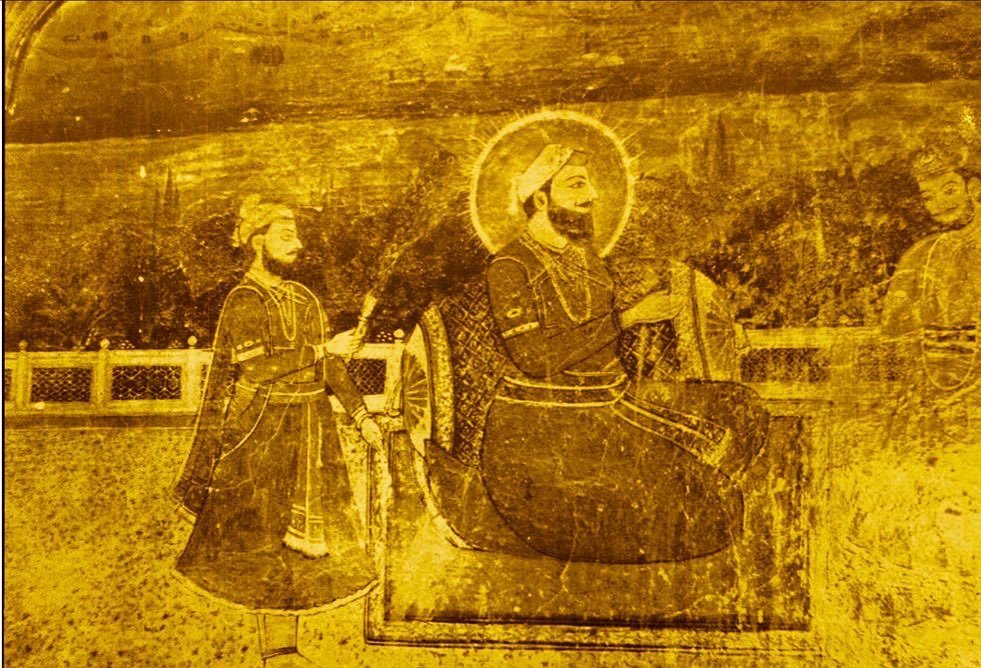
The martyrdom of Guru Tegh Bahadur, the ninth Sikh Guru, marks one of the most defining and valorous chapters in the history of Indian spirituality and human rights. Known as “Hind-di-Chadar” (the Protector of India), he chose to lay down his life in 1675 rather than compromise the fundamental religious freedoms of others. Facing the oppressive religious policies of Mughal Emperor Aurangzeb, Guru Tegh Bahadur’s sacrifice galvanized generations, reshaped the Sikh community’s sense of purpose, and became a perennial symbol of standing up for justice, liberty, and pluralism.
Historical Background
Born in 1621 to Guru Hargobind, the first Sikh military Guru, Tegh Bahadur was raised in an environment that emphasized both spiritual depth and martial valor. He succeeded as Guru at a time when Aurangzeb’s Mughal Empire was at its zenith but increasingly intolerant in religious matters. Aurangzeb re-imposed harsh taxes on non-Muslims (jizya), destroyed temples, and initiated systematic efforts at conversion, most brutally in Kashmir, where Pandits faced a chilling ultimatum: accept Islam or face death.
The Kashmiri Pandits, in desperation, turned to Guru Tegh Bahadur for protection. Encouraged by his young son Gobind Rai (later Guru Gobind Singh), the Guru agreed to confront Aurangzeb’s challenge, declaring that if he could be persuaded to convert, so too would the Pandits. This set into motion events that would culminate in his arrest and execution in Delhi.
The Path to Martyrdom
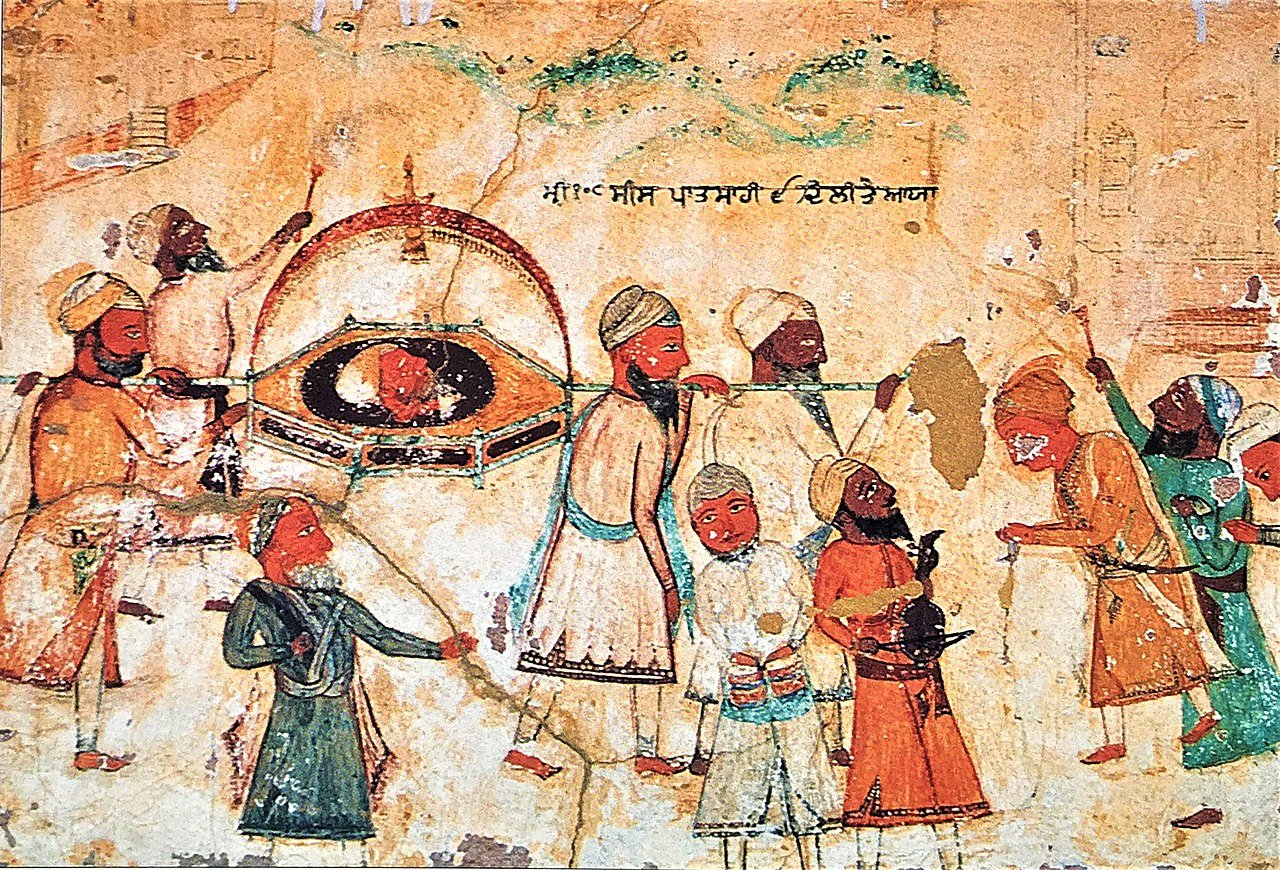
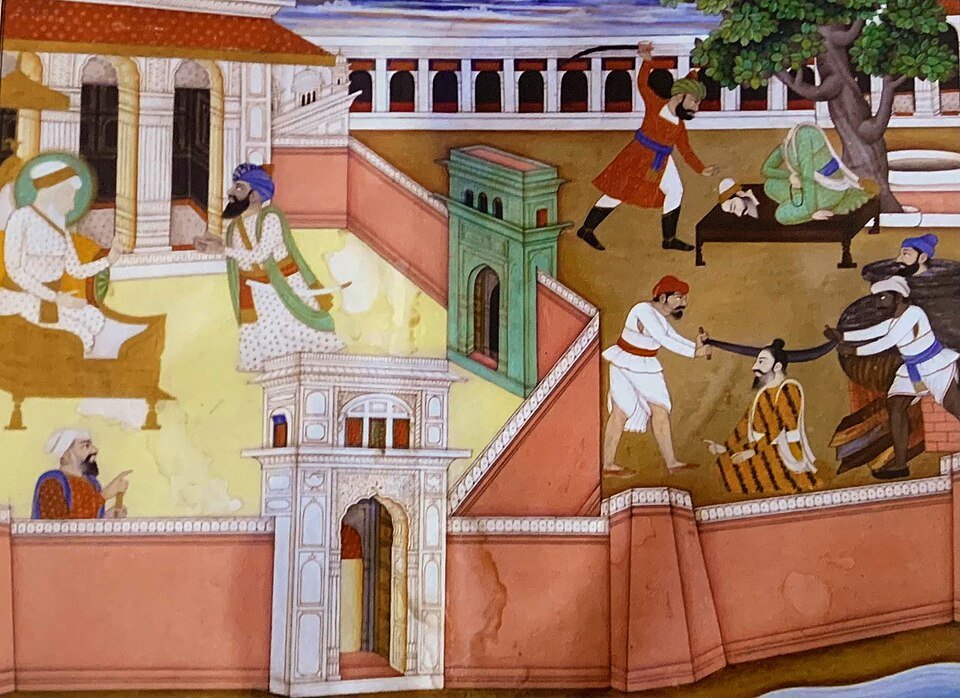
When Aurangzeb’s envoys demanded Guru Tegh Bahadur either convert to Islam or display a miracle, the Guru resolutely refused both. He stood firm in his principles, arguing that faith and conscience cannot be coerced by force, nor should spiritual authority be wielded for personal preservation. The Guru, along with his companions Bhai Mati Das, Bhai Sati Das, and Bhai Dayal Das, endured brutal torture in public. Eventually, Guru Tegh Bahadur was beheaded at Chandni Chowk, Delhi, on 24 November 1675. The site is today commemorated by the Sis Ganj Sahib Gurdwara.
This act was not only a defense of the Hindu Pandits, but also a broader statement: the upholding of the principle that every person—regardless of faith—must be free to follow their spiritual path without compulsion or fear. His companions’ executions, each marked by extreme cruelty, further exemplified their shared courage in the face of tyranny.
Impact and Historical Significance
Guru Tegh Bahadur’s martyrdom represents a watershed moment in the annals of religious freedom and resistance against oppression—not only for the Sikh community but for India and the world at large. The sacrifice galvanized the Sikh identity, infusing it with an ethic of fearlessness and a readiness to protect the rights of others. This ethos would define the development of the Khalsa under his son, Guru Gobind Singh, as well as the martial transformation of Sikhism.
By publicly standing against imperial tyranny and violent conversions, Guru Tegh Bahadur inspired ordinary Indians to assert dignity and self-respect in the face of persecution. His unwavering commitment to “Sarbat da Bhala” (the welfare of all) reinforced Sikhism’s humanitarian core, which transcends religious boundaries. The Guru’s legacy continues to be celebrated as a beacon for social justice and civil liberty.
For the Mughal Empire, the execution produced unintended consequences: it strengthened resistance among Sikhs and other communities, sowed seeds for future revolts under Banda Singh Bahadur, and contributed to the gradual decline of imperial unity.
The Memory and Legacy
Guru Tegh Bahadur’s self-sacrifice is annually commemorated as Shaheedi Divas—reminding millions in India and beyond that courage and conscience are the ultimate shields against oppression. Sites like Sis Ganj Sahib Gurdwara in Old Delhi and Gurdwara Rakab Ganj mark his martyrdom and cremation, respectively, serving as enduring monuments to his values.
His legacy endures in Sikh scripture, his hymns, and most of all, in the enduring Sikh commitment to justice for all. The Guru’s deeds remain an evergreen lesson that defending the rights of others, even at great personal risk, is among the highest moral duties.
Conclusion
The martyrdom of Guru Tegh Bahadur stands as an unparalleled act of sacrifice for the cause of religious liberty—a universal message relevant in every age and society. His unwavering resolve in the face of Aurangzeb’s repression transformed him into a symbol of righteous resistance, whose impact was not limited to his era or faith. By defending the Kashmiri Pandits and upholding the principle of freedom of conscience, Guru Tegh Bahadur shaped the Sikh community into a force for justice, and set a timeless example of empathy, humanity, and unyielding integrity. His memory compels us to cherish and protect the ideals of justice, pluralism, and freedom.