Introduction
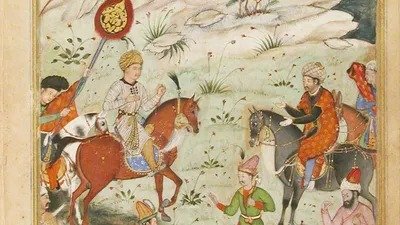
On 21 April 1526, Babur’s compact, composite army met and decisively defeated Sultan Ibrahim Lodi’s numerically superior host on the plain near Panipat, inaugurating Mughal rule in North India and reshaping the subcontinent’s military grammar with disciplined field fortifications, matchlock‑artillery integration, and maneuvered cavalry charges. The battle’s result flowed less from headcount than from doctrine: tulughma flanking tactics, ottoman‑style guns and carts, tight command, and the exploitation of Lodi’s unwieldy, faction‑ridden mass.

Background and build‑up
By the 1520s, the Delhi Sultanate under the Lodi dynasty was strained by Afghan clan rivalries and provincial disaffection, while the doab’s wealth remained a prize inviting external bids. Babur, a Timurid from Ferghana who had consolidated Kabul and probed Punjab repeatedly, leveraged his lineage claim, superior operational cohesion, and access to gunpowder artillery to mount a focused campaign toward Delhi and Agra. Ibrahim Lodi, facing internal dissent and underestimating firearms’ battlefield effect, mustered a large force—infantry, Afghan cavalry, and several hundred war elephants—confident that mass and momentum would prevail on open ground.
Orders of battle and technology
Babur fielded roughly 12–15,000 men with a high proportion of veteran horse archers, a matchlock corps, and a train of field guns mounted behind mantlets and lashed carts (araba) in an ottoman‑inspired laager, all knit together by clear command lines. Ibrahim Lodi brought perhaps 30–40,000 (or more) with elephants and large infantry blocks; however, his army suffered from uneven unit quality, limited integration of missile and shock arms, and factional command frictions that blunted coordination. The asymmetry was qualitative: guns and matchlocks to break charges, horse archers for harassment and feint, maneuver elements to envelop—versus a mass seeking decisive push without suppressive fire.
Babur’s field craft at Panipat
Babur anchored his center with carts roped and chained into defensive bays, fronted by mantelets for matchlockmen and interspaced with gun emplacements to deliver sustained fire and deny elephant charges a clean run‑in. He echeloned light cavalry on both wings and held mobile reserves for the tulughma—preplanned, wheel‑out envelopment once the enemy fixed on the fortified center. The ground, narrow between village mounds and brush, compressed Lodi’s deployment, amplifying Babur’s firepower advantage and reducing the risk of a successful wide flanking move by the Afghans.
The battle: phases to decision
Opening fires: As Ibrahim advanced, Babur’s guns and matchlocks disrupted Afghan ranks and spooked elephants, creating hesitation and local disorder in the front line.
Fix and flank: With the Lodi center engaged against the cart‑and‑gun line, Babur signaled tulughma; his right and left cavalry swung out in arcs to strike the Afghan flanks and rear, while horse archers harassed any attempt to redeploy.
Collapse: Trapped in constrained ground under fire, with elephants milling and command signals muddled, portions of the Lodi line broke; Ibrahim died fighting near the center, and the rout cascaded across the field.
Why Babur won
Firepower integration: Field artillery and matchlocks used defensively behind portable works neutralized elephant shock and blunted massed infantry advances.
Maneuver doctrine: Tulughma applied disciplined, prebriefed flanking by mobile wings once the enemy’s center was fixed, converting a static defense into an encirclement.
Command cohesion: A smaller, veteran corps with unity of command and rehearsed roles outperformed a larger, faction‑ridden force with weak staff work and limited combined‑arms practice.
Terrain use: Choosing a constrained frontage near Panipat forced the Lodi host into a kill zone where firepower density and flank arcs could be maximized.
Immediate outcomes
Babur marched on Delhi and Agra, taking the capitals and treasuries that underwrote a durable presence, while issuing proclamations to steady revenue, protect agrarian circuits, and reward allies. Afghan resistance did not end—survivor coalitions and regional Afghan houses remained potent—but the center of gravity shifted to a Timurid court with gunpowder credibility, administrative ambitions, and a transregional vision that would be systematized under Humayun and Akbar.
Military significance
Panipat validated the decisive battlefield role of gunpowder arms when integrated with field engineering and cavalry maneuver, accelerating the diffusion of ottoman‑style methods across North India. War elephants, still intimidating, were shown vulnerable to disciplined fire; infantry without missile cover or protection against guns could not decide battles by mass alone; and encirclement tactics, not mere frontal shock, became the new orthodoxy for ambitious polities.
Political and administrative ripple effects
With Delhi and Agra in hand, Babur began forging elite coalitions—Turani, Irani, Hindustani—to stabilize rule, while keeping the army in campaign trim against Rajput and Afghan challenges that would culminate at Khanwa (1527) and Ghagra (1529). The Mughal project’s administrative maturation would follow under Akbar—mansabdari, revenue survey, provincial structures—but Panipat supplied the founding myth and the practical demonstration that smaller, disciplined forces could refound sovereignty on the doab’s wealth.
High‑yield anchors
Date and place: 21 April 1526; plain near Panipat, north of Delhi.
Forces: Babur ~12–15,000 with artillery, matchlocks, composite cavalry; Ibrahim Lodi 30–40,000+ with elephants and large infantry blocks.
Tactics: Cart‑laager with mantelets; sustained artillery/matchlock fire; tulughma flanking; horse‑archer harassment; terrain canalization.
Outcome: Ibrahim Lodi killed; Delhi–Agra captured; Mughal rule initiated; gunpowder–maneuver doctrine validated.
Conclusion
The First Battle of Panipat was less a contest of sheer numbers than a referendum on methods: artillery and matchlocks behind engineered fronts, married to planned envelopment and cohesive command, shattered an older mass‑and‑elephant paradigm and opened the door to Mughal state‑building. In a single morning’s decision, the strategic center of North India shifted to a Timurid court whose mastery of firepower and maneuver would define the subcontinent’s imperial arc for a century.